
Let’s be honest with you: a wedding timeline isn’t just a list of times in an Excel spreadsheet. It’s a delicate balance between what you want to experience, what your vendors need to do their best work, and the complete unpredictability of a day involving dozens of people. And trust us, after years of photographing and filming weddings, we’ve seen it all.
The bride who missed her motorway exit and arrived 45 minutes late, dragging the entire day down with her. Guests who lingered after the ceremony and never made it back to the venue, the result being an hour’s delay, cold food, and a couple who didn’t get to eat a hot meal all evening. The sweltering July heat that kept everyone outside for 45 minutes while the non-air-conditioned dining room turned into an oven. We’ve lived through all of it, we’ve run to salvage what could be salvaged, we’ve negotiated, improvised, and we’ve always found a way through. But we would have much preferred it never happened in the first place.
So here’s what we’ve learned.
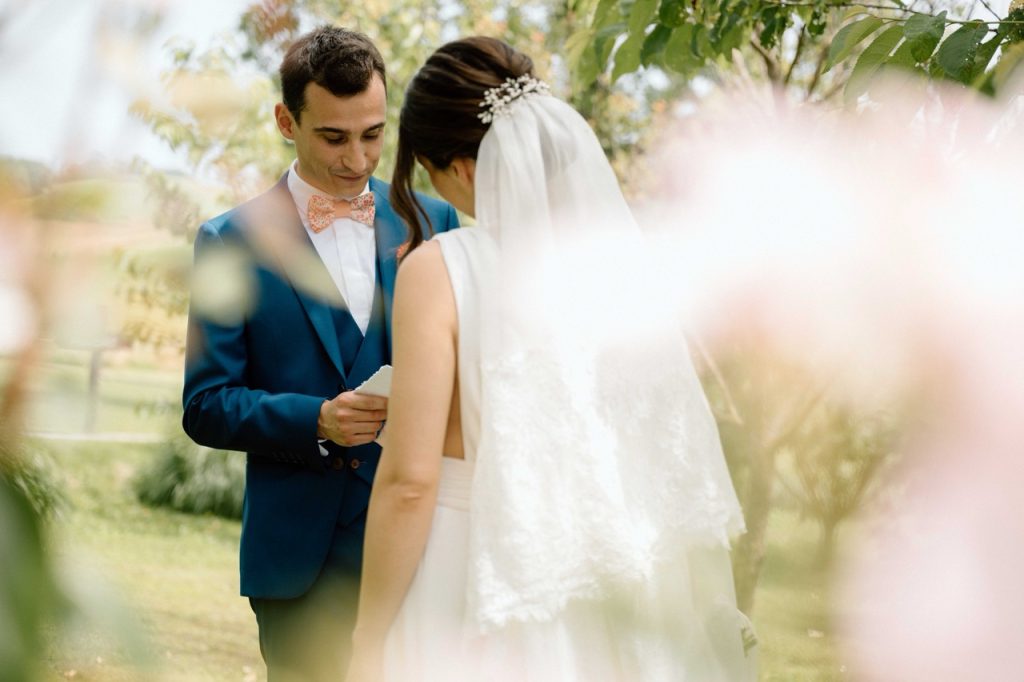
Rule number one: build breathing room into your timeline
The natural instinct when planning a wedding is to pack as much as possible into the day. That’s completely understandable, you want everything to be perfect and nothing left out. But an overly tight schedule is a ticking time bomb. One unexpected hiccup, and the whole day topples like dominoes.
Our advice is simple: for every major transition in the day, build in a 15 to 20-minute buffer. Between the end of getting ready and leaving for the ceremony, between the end of the ceremony and the start of the cocktail hour, between drinks and dinner. These little margins don’t show on the timeline, but they make all the difference when something goes sideways.

Group photos: quick and done right
This is often where time quietly disappears. It starts with the family photo, then someone calls over their cousins, then the school friends want a shot, then the colleagues, and suddenly it’s 7pm and the cocktail hour ended long ago.
Our recommendation: cap it at 10 groups maximum, allow 25 minutes right after the ceremony while everyone is still gathered, and designate someone in advance, someone who knows everyone, whose job is to round up each group quickly. With this system, 25 minutes is plenty, and everyone gets to go enjoy the drinks reception.

The couple session: don’t sacrifice it
t’s often the first thing to go when the timeline runs late, and it’s almost always a regret. The couple session is your only real moment alone together during the day, away from the noise and obligations, and it’s often where the most beautiful images happen. Plan for an hour, ideally in the late afternoon to make the most of that golden evening light, and protect that slot the same way you’d protect any other important moment of the day.
In summer, you’re in luck: the sun sets late, giving you flexibility you simply won’t have in autumn or winter. Make the most of it.
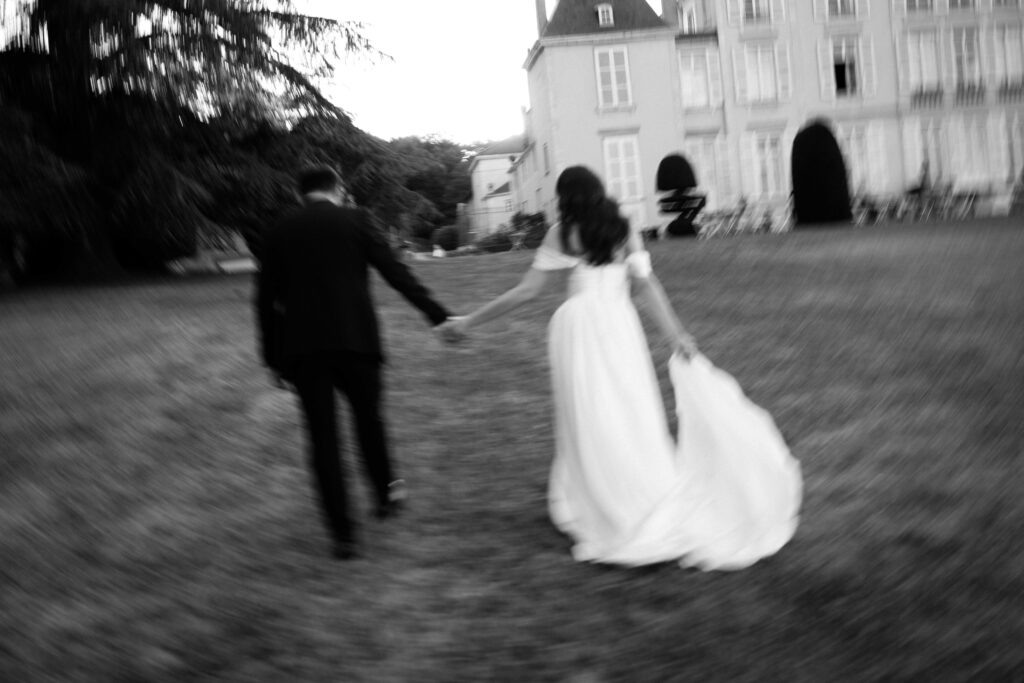
A sample timeline for a summer wedding
There’s no such thing as a universal timeline, every wedding is different. But here’s a starting point for a summer day with a late-afternoon ceremony:
10:00 am — Getting ready begins (hair and makeup)
12:00 pm — Your photo & video team arrives (detail shots, atmosphere, venue)
12:00 pm — Lunch break for the couple — often forgotten, always important
1:30 pm — Groom gets dressed
2:15 pm — Fun shots with the girls, then bride gets dressed
3:30 pm — First look, just the two of you
4:00 pm — Leave for the ceremony
4:30 pm — Ceremony
5:45 pm — Group photos (25 minutes maximum)
6:30 pm — Cocktail hour — couple joins their guests
7:45 pm — Couple session at golden hour, vow exchange if desired
8:30 pm — Grand entrance and start of dinner
11:30 pm — First dance and dancefloor opens
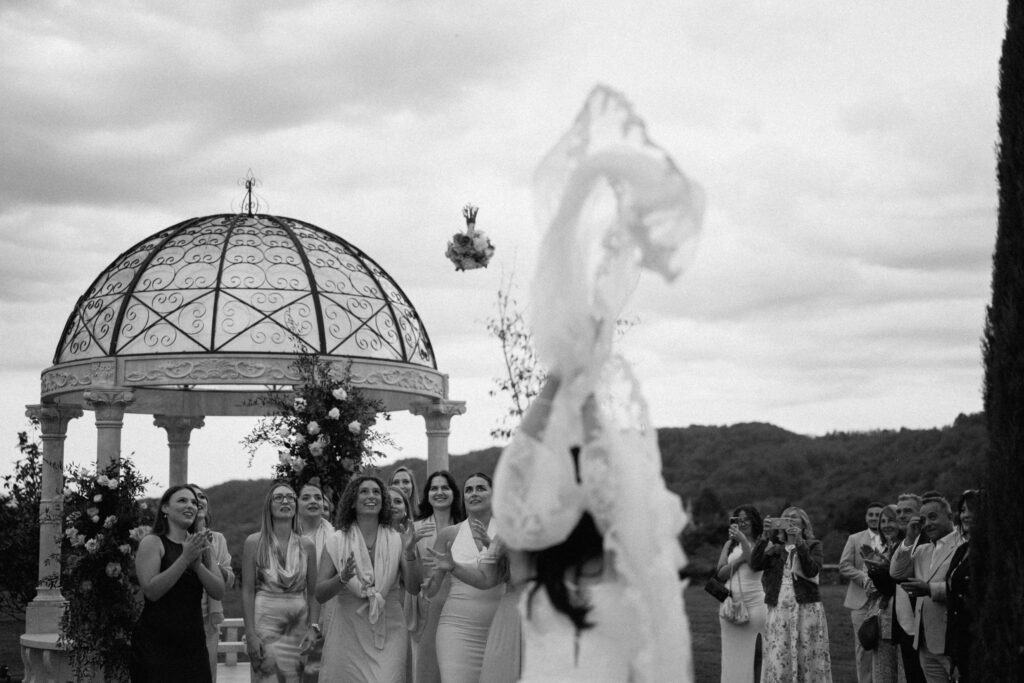
The real question to ask yourself
Before building your timeline, ask yourself this: what do you actually want to experience that day? If the answer is dancing all night with your friends, make sure dinner doesn’t wrap up at midnight. If it’s having real couple portraits in the evening light, protect that slot no matter what. If it’s taking the time to savour every moment without stress, build your timeline accordingly, and stop trying to fit everything in.
A successful wedding isn’t one where everything went exactly to plan. It’s one where you had time to breathe, to look at the person in front of you, and to know that you’re exactly where you’re supposed to be.
If you’d like help thinking through your timeline, that’s exactly the kind of conversation we love having with our couples during our first meeting.
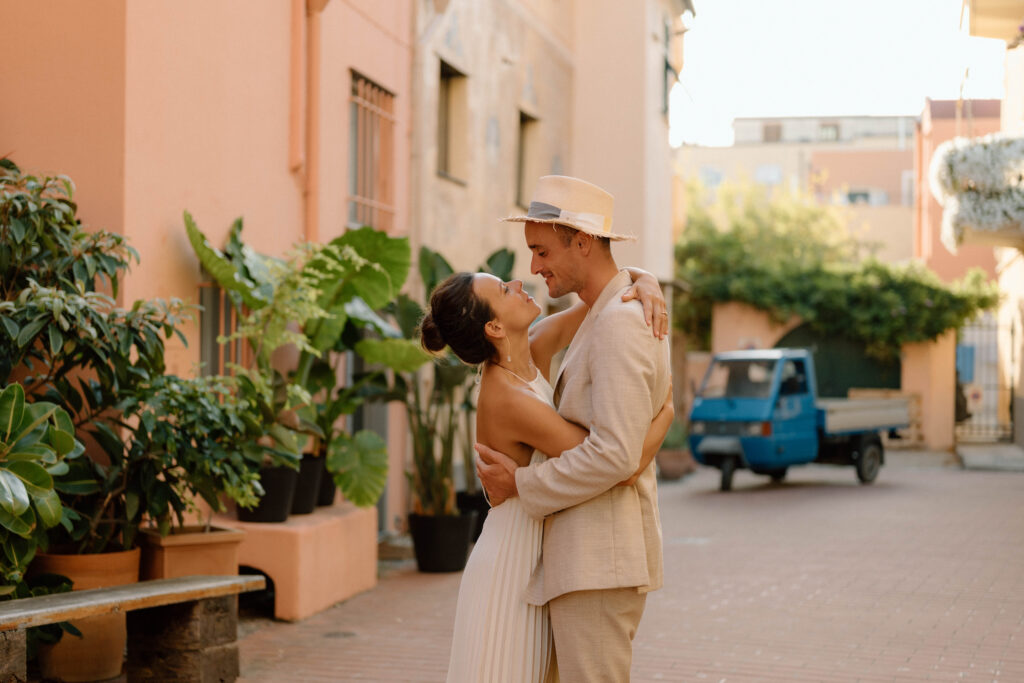
One last piece of advice: work with a wedding planner
We can help you think through your timeline beforehand, answer your questions and steer you toward what tends to work well so you’ll have beautiful images, but we’re not wedding planners, and that’s not our role. On the day itself, our job is to keep our eyes wide open, to be in the right place at the right moment to capture the real emotions: the glances, the tears, the bursts of laughter. If we’re busy managing logistics or chasing down slow guests, we’re missing exactly what you hired us for.
A great wedding planner is the one who handles the unexpected quietly behind the scenes while you enjoy every moment. The one who saw the bride miss her exit and had already reshuffled the timeline before you even knew anything was wrong. We regularly work with wonderful planners we’re happy to recommend, feel free to ask us when you first get in touch.
Do you want to discover more about our bespoke wedding services? We invite you to explore the dedicated page.


